Darjeeling is considered one of the finest loose leaf teas and is often referred to as the Champagne of teas. That’s quite a claim, so why is Darjeeling Tea special?
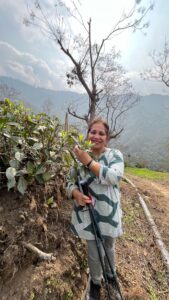
The new First Flush Darjeeling at Glenburn Estate 2025
Where is Darjeeling?
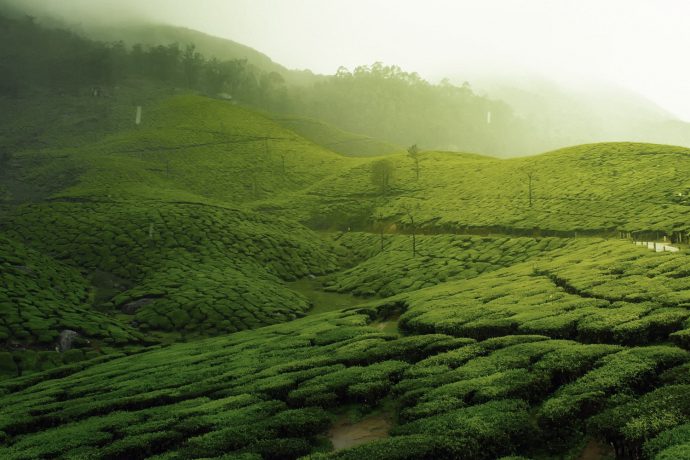
Location is key to the quality of this product, so where is it? Darjeeling is a region in West Bengal, India. Lying on the western edge of the Himalayan Mountains, its steep terrain sits high above sea level, providing an amazing landscape.
There are several reasons why it offers fantastic conditions for growing tea bushes.
Firstly, the sloped terraces hold mineral-rich and well-drained soil. The high altitude is protected from the intense heat in other parts of India. The area is often shrouded in mist, providing a constant source of moisture for tea bushes.
The climate means that tea bushes grow slowly, taking longer to establish and bud, which results in flavoursome pickings. What’s more, it is not possible to continuously harvest the leaves. Therefore, there are only two harvests per year. The first flush of the freshest new buds is picked in Spring and the second flush in Summer.
If you visit Darjeeling, you’ll see that the hillsides are filled with long-standing cultivations, alongside more recently planted tea gardens. Surrounding them are streams of flags, flapping in the breeze, a sign of the Buddhist culture of the region.
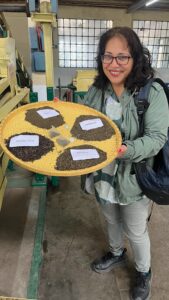 How Darjeeling Tea is Processed
The terrain cannot be worked by machines, so pickers have to scale the steep landscape and pluck the newest buds by hand. The whole leaves are processed using a traditional, orthodox method. That involves rolling the wilted leaves, gently oxidising and then drying. The tea is then sorted by filtering different-sized particles, with whole leaves commanding a premium price.
Darjeeling is a black tea; however, it is oxidised for less time than other black teas. As a result, it delivers a golden colour and light aroma and flavour. The first flush is often described as fruity and floral, with a subtle muscatel sweetness. A deeper muscatel flavour and colour, with an underlying light astringency, are associated with the second flush.
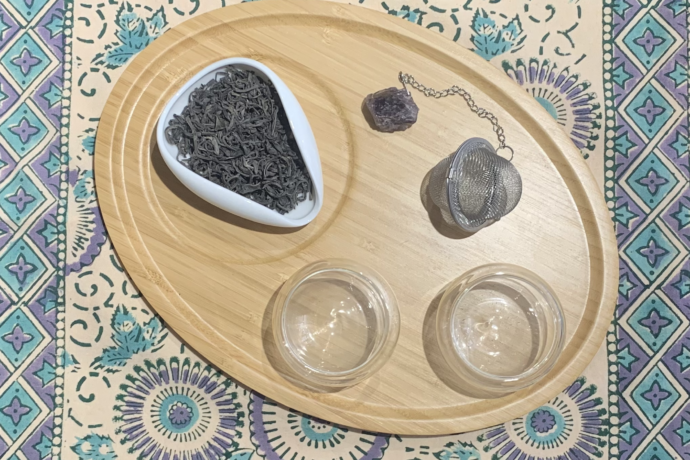
For the perfect cup of Darjeeling tea, it is advised to brew the leaves in water at 90° for 3-4 minutes before pouring. This allows time for the rolled leaves to unfurl and release their delicate flavours. Milk is to be avoided, but some people serve it with a slice of lemon.
Why is Darjeeling Tea Compared to Champagne?
One association between Darjeeling tea and Champagne is the complex and distinctive muscatel and floral notes. This gives both drinks an elegance that is appreciated when sipping.
Secondly, like Champagne, Darjeeling tea is a product with Geographical Indication status. It has been recognised that the specific growing conditions are essential to the flavour, so the tea bushes have to be grown and processed within a specific area. When awarded GI status in 2024, this was India’s first origin-protected product.
The limited harvest also offers exclusivity, with only around 1% of the tea produced in India being Darjeeling.
Finally, the provenance and reputation for quality mean that both beverages command a higher price.

Darjeeling & Afternoon Tea
When Anna Maria Russell, the 7th Duchess of Bedford, requested a pot with bread and cakes between lunch and dinner, she specified Darjeeling. This is believed to be the start of the British Afternoon Tea, which proved popular with her associates and is still widely enjoyed today. The delicate, fresh aromas and flavour of the tea pair perfectly with cucumber sandwiches, lemon cake and sweet pastries.
In addition, Darjeeling contains polyphenols and l’theanine, which support digestion, good health, and enhanced focus. All good to know if you enjoy a regular afternoon tea with friends!
Darjeeling in Spring
At Holy Cow Tea, we stock first flush FTGFOP Darjeeling. Here, traditional and sustainable practices are followed to ensure the highest quality harvest each spring. It’s a popular option with our customers, so I often need to restock our supplies!
Fortunately, I will be taking my second trip to Bengal in the Spring of 2027. My trip includes a stay at the Darjeeling Glenburn Tea Estate. I’ll get to learn more about the intricacies of this premium product, see the processes first-hand and sample the exquisite aromas and flavours in the most impressive of locations. I can’t wait to share the insights I gather into why Darjeeling Tea is so special!